
OnSiteVRU Dataset
Background
As urbanization and travel demand grow, mixed traffic flows involving motor vehicles, autonomous vehicles, pedestrians, and bicycles have become markedly more complex, and the safety of vulnerable road users (VRUs), such as pedestrians and cyclists, is increasingly important. Autonomous vehicles must recognize and respond to VRU behavior quickly and accurately in complex environments, but existing test methods and datasets insufficiently cover behavioral diversity and dynamics. More representative, diverse, high-precision VRU trajectory datasets are therefore essential, despite high data-collection costs and complex behavior annotation. Mixed urban traffic is highly complex and dynamic at intersections, shared motor/non-motorized roads, and urban villages. Random VRU behavior, diverse route choices, and frequent interactions with motor vehicles complicate traffic-flow characteristics and increase conflict and collision risk. High-resolution trajectory data provide accurate microscopic behavior information, supporting traffic-flow theory and the digital transformation of smart cities and intelligent transportation. Existing datasets still need better VRU-scenario coverage, data quality, and diversity.
Dataset Introduction
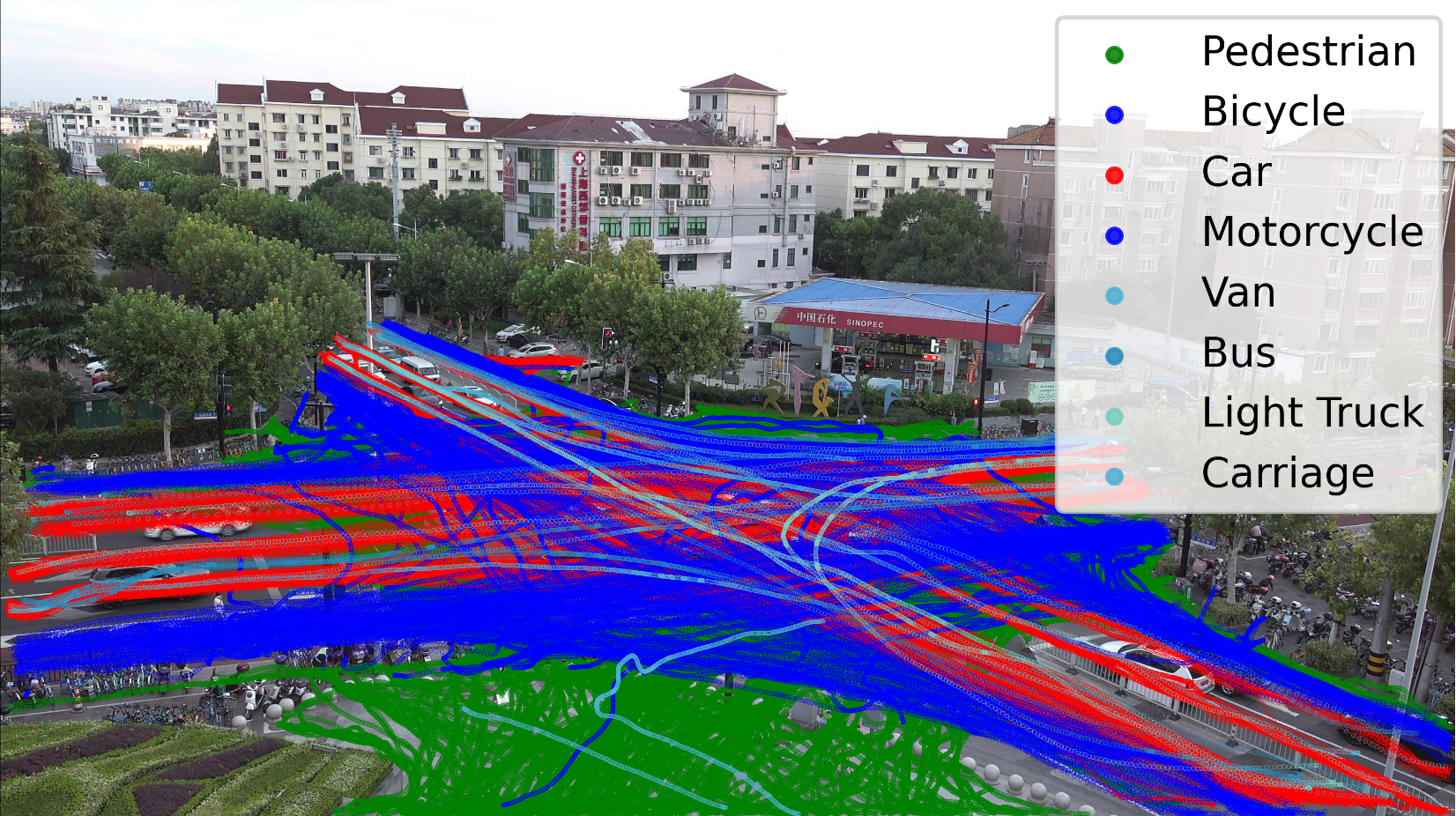
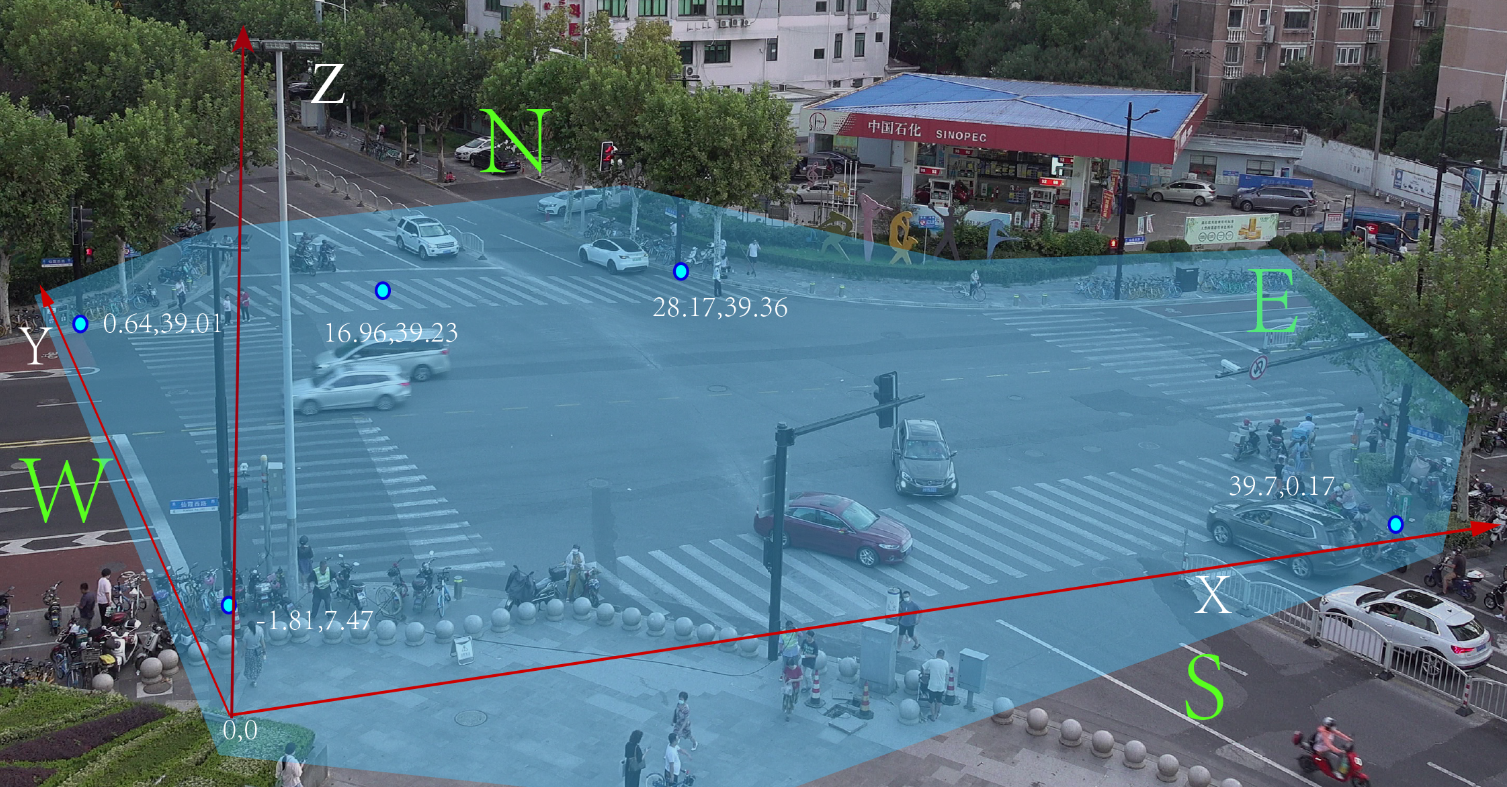
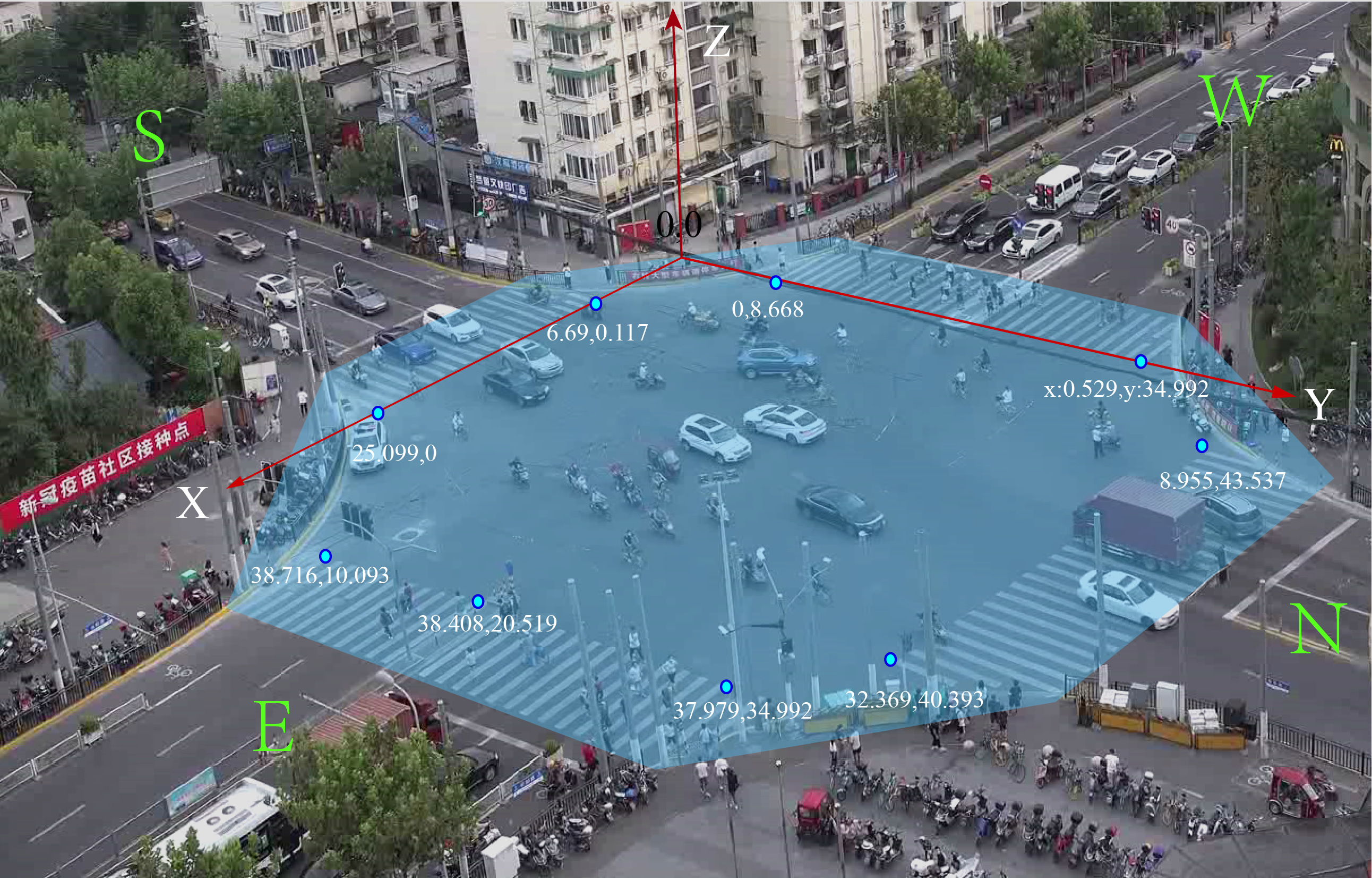
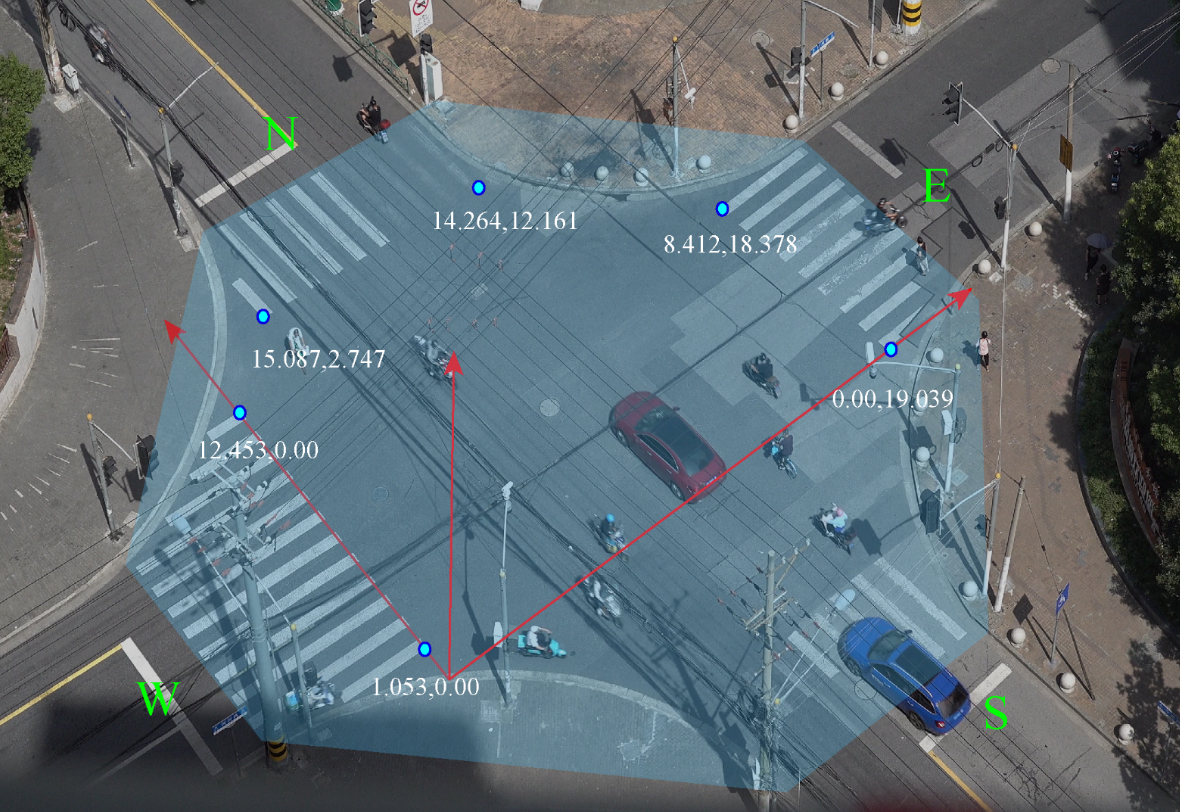
The OnSiteVRU dataset contains multiple intersection and road-segment scenarios with different types of road users. Intersections include Xianxia Road–Jianhe Road, Changyang Road–Longchang Road, Moyu Road–Changji East Road, and Hejian Road–Ningwu Road. Each contains motor-vehicle, e-bike, and bicycle trajectories, totaling about 17,429 trajectories. Road segments include Caoyang Road, a lane-marking-separated segment with 1,256 records over 50 minutes, and Anyuan Road, an unseparated two-way two-lane segment recorded for 1 hour 40 minutes. Urban-village data were collected in Jiading, Shanghai and Pingjiang, Suzhou. OnSiteVRU supports research on VRU behavior in mixed traffic for transportation and vehicle researchers.
Full Dataset Access Link:https://www.kaggle.com/datasets/zcyan2/mixed-traffic-trajectory-dataset-in-from-shanghai
Data Format


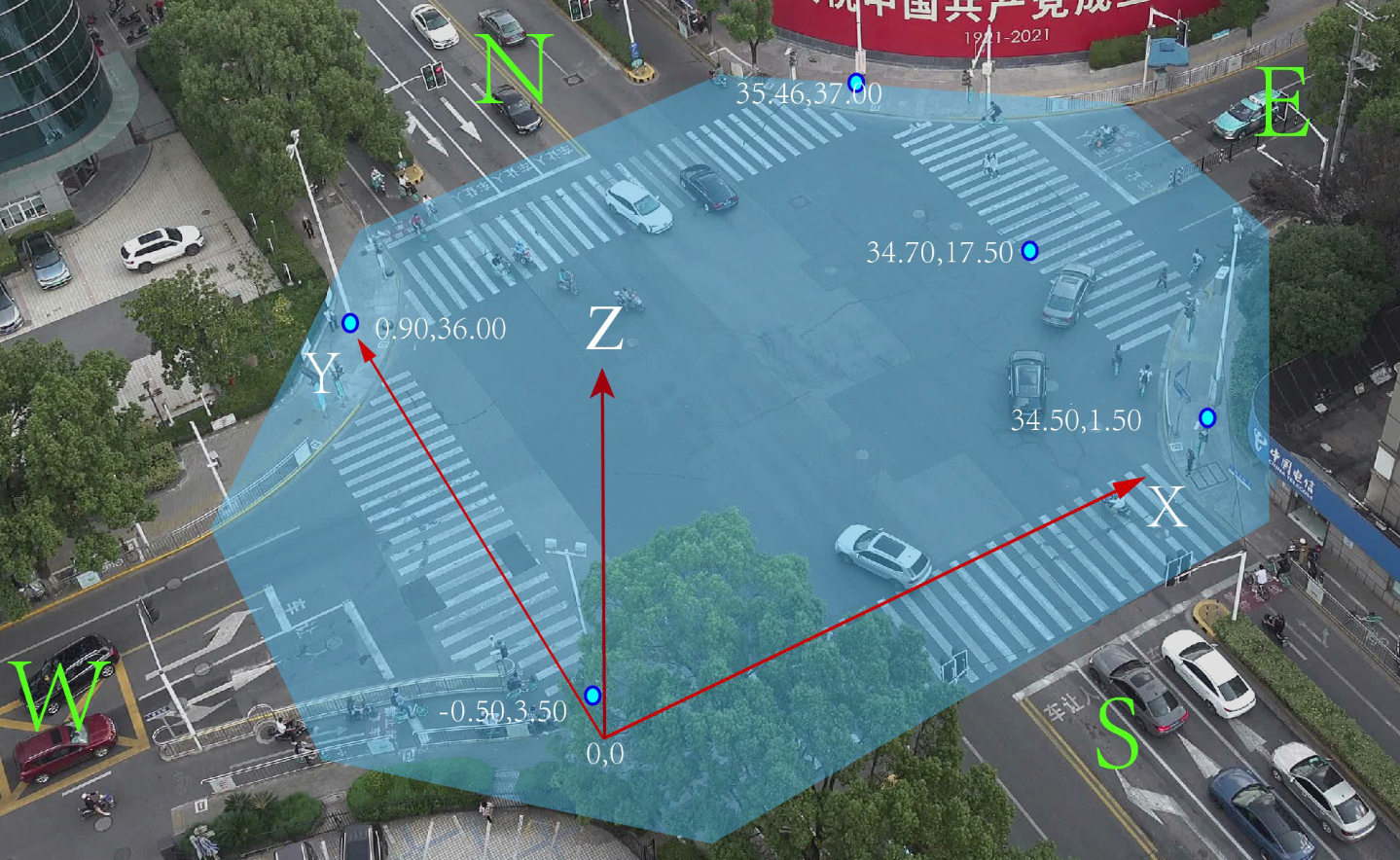


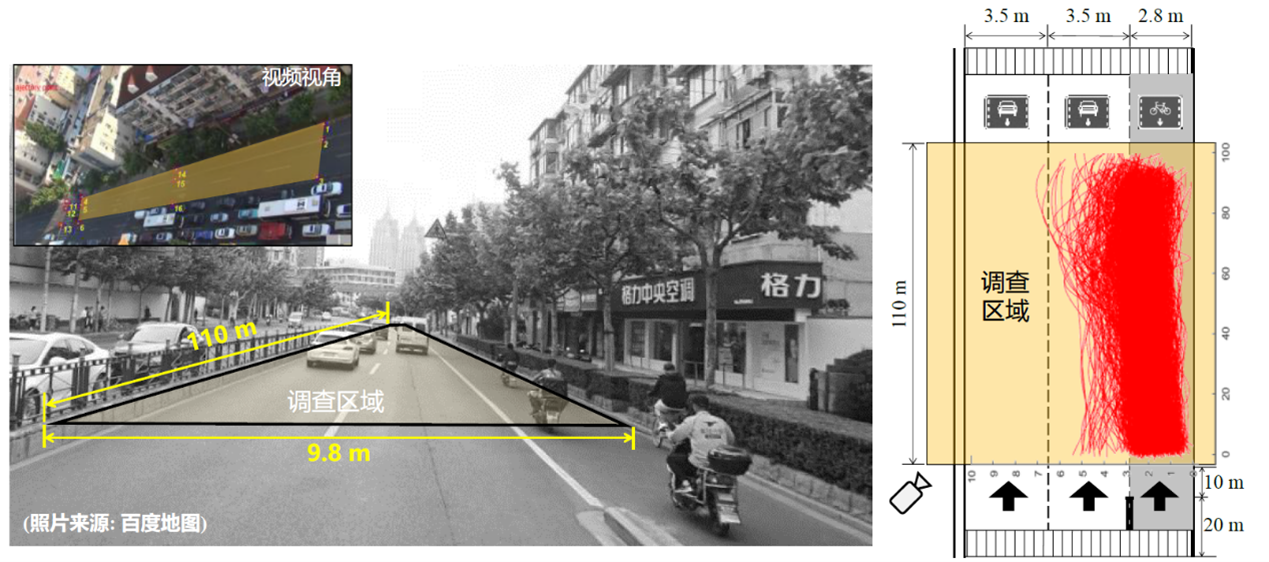
Leaderboard
The VRU trajectory prediction ranking list was established based on the OnSiteVRU data set, aiming to provide a unified evaluation platform for trajectory prediction models and fill gaps in related fields. The release of this ranking can provide an in-depth understanding of the performance of current models in the same task scenario and promote the continued development of related research.
OnSiteVRU trajectory prediction ranking provides a total of five data sets, including All_data, Intersection, JH_total, LC_total and MY_total. Among them, All_data contains all data, covering intersection and road segment scenes; Intersection contains four intersection scenes, and the remaining data is individual intersections. Each scenario includes 5 observation steps and 6 prediction steps, a total of 11 steps, with a time frequency of 0.48 seconds. Participants can train the model using any training data and test it on specific test data. When submitting, you must follow the naming rules and submit the test results of the corresponding data set. Please note that when testing, you must ensure that the order of the test samples remains unchanged (the data is not labeled and is used directly for algorithm training). To learn more about the rankings, please visit the link:OnSiteVRU trajectory prediction rankings。
Conclusion and Outlook
OnSiteVRU has significant advantages over traditional open source data sets: its VRU density and ratio are higher, the scene coverage is wider, and it can more comprehensively reflect the behavioral characteristics of VRUs in mixed traffic flows; the data accuracy reaches 0.04 seconds, providing rich micro-behavior information, laying the foundation for refined traffic flow modeling and risk analysis; at the same time, the data set combines natural driving data from an overhead perspective and real-time dynamic detection data from a vehicle perspective, meeting diverse needs such as traffic flow modeling, trajectory prediction, and autonomous driving virtual testing. In addition, the data covers environmental information such as traffic lights, interference objects, and real-time maps, which can more comprehensively restore interactive events. Currently, the team is measuring higher-precision map information and plans to develop more scenarios such as T-intersections to improve the diversity and practicality of the data set. In the future, OnSiteVRU will continue to expand scene coverage and data dimensions to provide stronger support for mixed traffic flow research and the development of autonomous driving technology.